
What to Send Someone Who Just Lost a Loved One
When someone you care about has just experienced a death, you may find yourself searching for the right thing to send. Flowers? Food? A sympathy gift they can keep? You want to acknowledge what happened, but you don't want to give them one more thing to manage.
There isn't one perfect gift for someone who is grieving. The most thoughtful gesture is one that fits the person, their relationship with the person who died, and what their days look like right now. Sometimes that is a meal. Sometimes it is a note that says the person's name. Sometimes it is a small object they can carry into the world.
As a death doula, I've seen how much it matters when people continue to show up after the initial rush of condolences. Here are a few ways to do that, whether the loss happened yesterday or months ago.

If the death was recent, send something that asks very little of them
In the first days after a death, even ordinary decisions can feel like a lot. A gift that needs watering, assembling, scheduling, or a thank-you call may add to that load. Choose something simple to receive and use.
A meal or grocery delivery. Ask about dietary needs if you can, and let them know there is no need to host you when it arrives. A gift card for a nearby restaurant or delivery service also lets them choose when to use it.
A handwritten card. You don't need profound words. A specific memory of the person who died can mean more than a polished condolence. If you didn't know them, simply acknowledge the death and say that you're thinking of your friend.
Concrete help. If you're close enough to offer it, try “I can pick up groceries on Thursday” or “I can take the dog for a walk this weekend.” A specific offer is easier to answer than “Let me know if you need anything.”
If you're unsure what would be welcome, a brief message asking about their preferences is thoughtful too. They may already have more flowers or food than they can use.
If you want to give something lasting, think about how they'll use it
A lasting sympathy gift doesn't have to promise comfort or a way through grief. It can simply say, “I see that this is part of your life now, and I haven't forgotten.”
A photograph, a written memory, or a small keepsake connected to the person who died may be meaningful, particularly when you know the recipient well. Be careful with personalized items if you aren't sure of their tastes or their relationship to the person who died. Grief is personal, and not everyone wants a memorial object in their home.
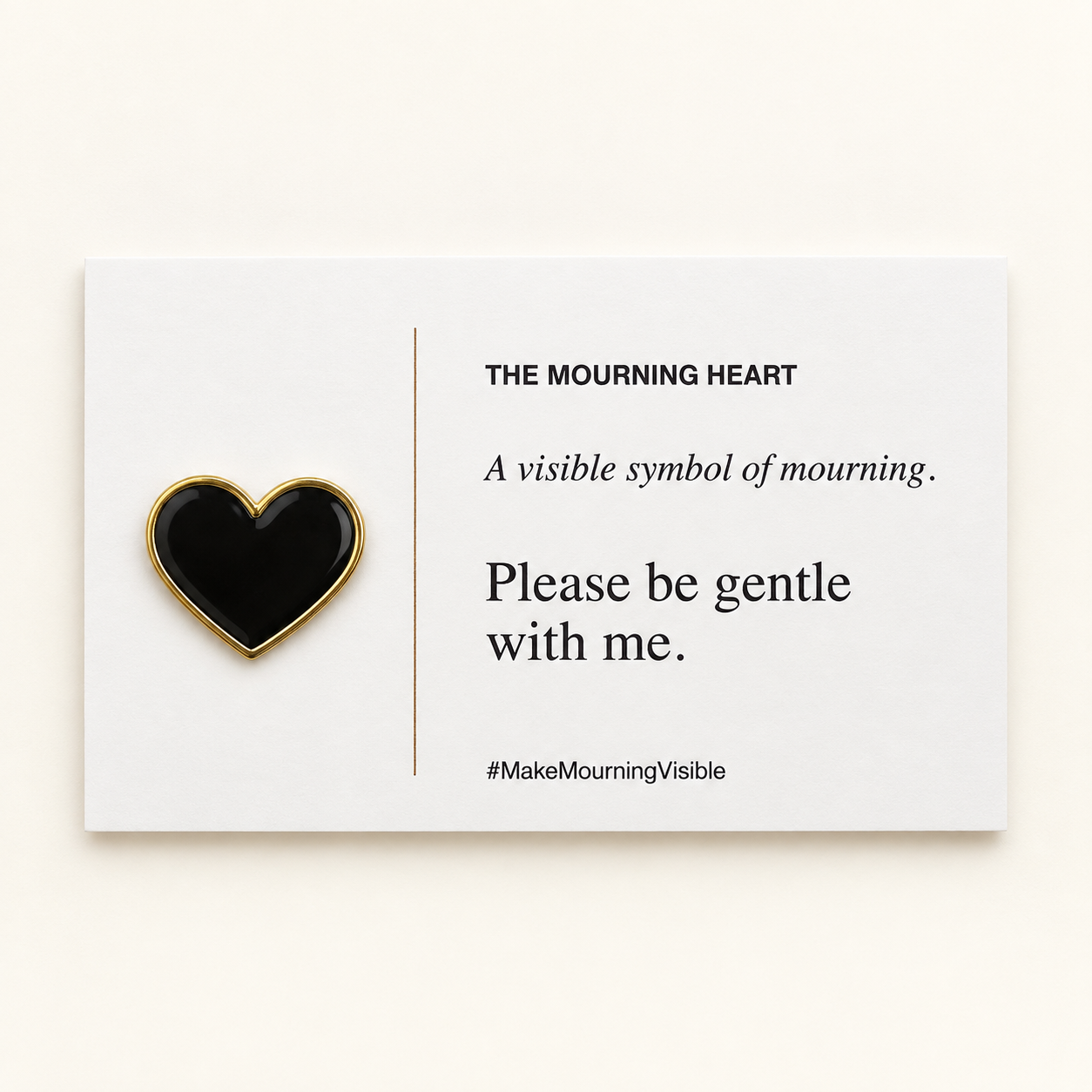
Another possibility is something they can choose to wear when they want their mourning to be visible. The Mourning Heart is a small black heart pin with a simple message: I am mourning a death. Please be gentle with me. It comes on a card explaining the symbol, so the recipient doesn't have to explain it from scratch. They can wear it on a jacket, shirt, or bag whenever it feels useful, or leave it aside. There is no expectation attached to the gift.
I created it because grief often becomes invisible to the people around us long before it feels less present to the person living with it. A heart can be a quiet way to ask for a little more patience in public. If that sounds like the kind of support your person might welcome, you can see the Mourning Heart and choose one to send.
What to write with a sympathy gift
You don't have to find words that make the loss better. Name what happened, say something true, and take the pressure off them to respond. For example:
“I'm so sorry about your mom, Maria. I remember how she made everyone feel welcome at your kitchen table. I'm thinking of you, and you don't need to write back.”
If you didn't know the person who died:
“I'm so sorry about your brother. I know how much he means to you. I wanted you to know I'm thinking of you. No reply needed.”
Use the person's name if you know it. Avoid guessing how the grieving person feels or telling them what this loss is supposed to mean. A short, honest note is enough.
Don't forget the weeks and months afterward
Support often arrives all at once, then grows quiet. Put a reminder in your calendar to check in later, especially after the funeral or memorial. You could send a card on a birthday, an anniversary, or an ordinary Tuesday. There is no deadline by which someone stops needing acknowledgment.
A later gift can be as simple as a message: “I was thinking about Elena today and wanted to say her name.” You can offer a meal or company again, without assuming they want either. Let them tell you.
The best sympathy gift begins with paying attention
If you came here wondering what to buy for someone who just lost a loved one, you don't have to solve their grief with a gift. Notice what might make this particular person's next few days easier, or what might help them feel remembered in the months ahead. Offer that with care, and keep showing up.

For someone who would appreciate a visible, wearable acknowledgment of their mourning, explore The Mourning Heart. For someone who needs food, practical help, or a friend willing to listen, begin there. The gesture matters most when it meets the person where they are.